Roofing & Restoration Services in Miami Dade County, FL
Local Roofing Contractor Expertise
From Coral Gables to Kendall and across Miami-Dade County, roofs face relentless heat, humidity, and storm exposure. A roofing contractor in Miami Dade County, FL who understands your local climate keeps water from reaching walls and foundations. We handle inspections, repairs, installations, and emergency damage control when leaks strike.
This page covers how roofing and water damage restoration work together, what to watch for, and why timing matters in South Florida's building environment.
How Roofing & Water Damage Restoration Work
Stop leaks before they cost you thousands in structural repair and mold remediation
1Assess & Inspect
Walk the roof for missing shingles, tile cracks, pooling water, and worn seams. Document photos for insurance before cleanup or repair work begins.
2Stop the Water
Temporary tarping or patching halts active leaks. In Miami-Dade, water can penetrate drywall and wood framing in hours, so speed prevents mold growth.
3Dry & Restore
Remove wet materials, run dehumidifiers, and clean affected areas. Water damage restoration ensures no hidden pockets remain to trigger mold.
4Rebuild & Code Comply
Install new roof decking, underlayment, and materials with Miami-Dade Notice of Acceptance approval. New construction triggers wind and impact tests.
You'll always know what's happening next—and when.
Our Services
Roof Repair & Patching
Leaks, missing shingles, cracked tiles, and storm damage need quick attention in neighborhoods like Wynwood, Little Havana, and residential Kendall. We patch, seal, and reinforce weak spots with NOA-approved materials that meet Miami-Dade wind uplift standards.
- Shingle & tile replacement
- Flashing and vent sealing
- Underlayment repair
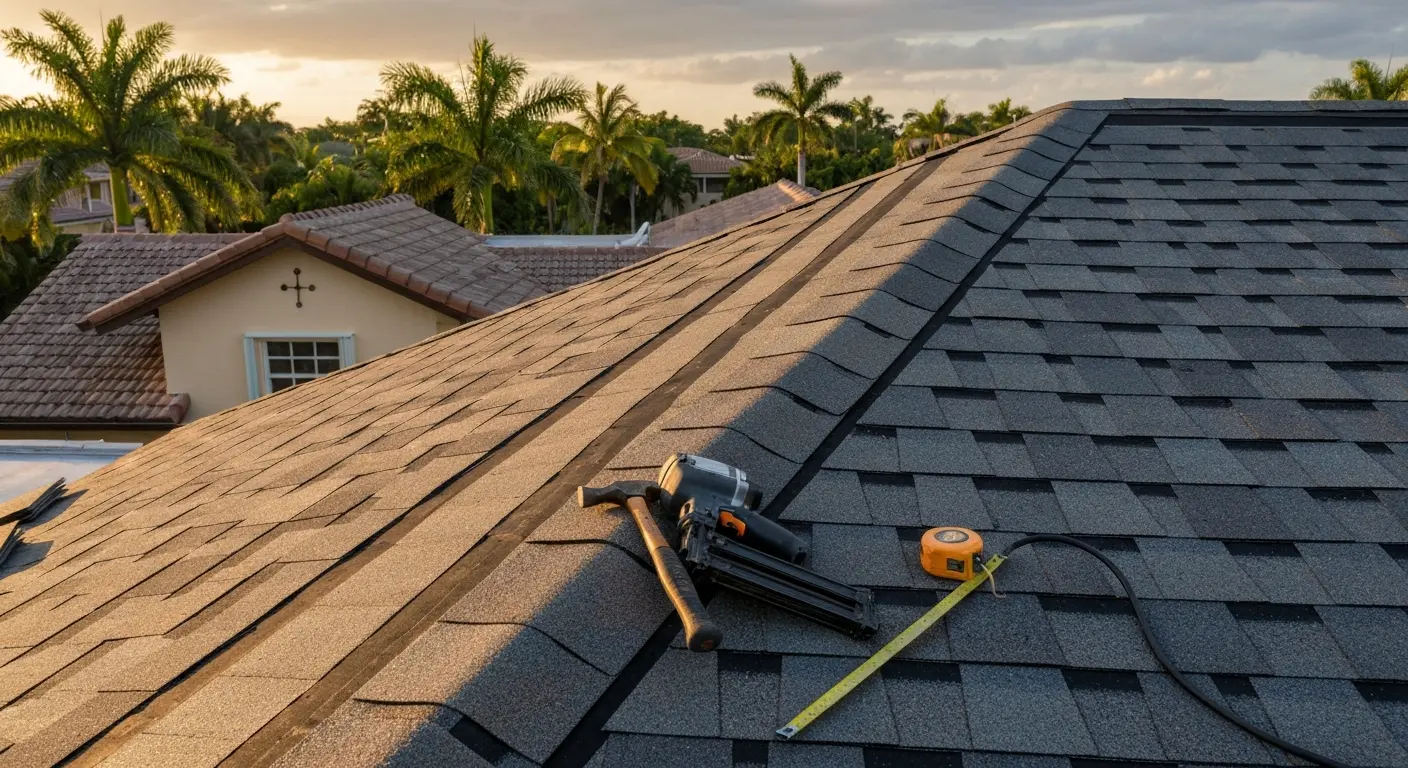
Shingle repair and replacement in Wynwood and surrounding Miami-Dade neighborhoods
Roof Installation & Re-Roofing
When a roof reaches the end of life or fails inspection, full installation replaces decking, underlayment, and all fastening. Miami-Dade permits require roof-to-wall connections and secondary water barriers on all new work. Masonry block homes in Coral Gables and Homestead need especially strong attachment systems.
- Metal, tile, asphalt shingle systems
- Secondary waterproofing membranes
- Permit coordination & final inspection
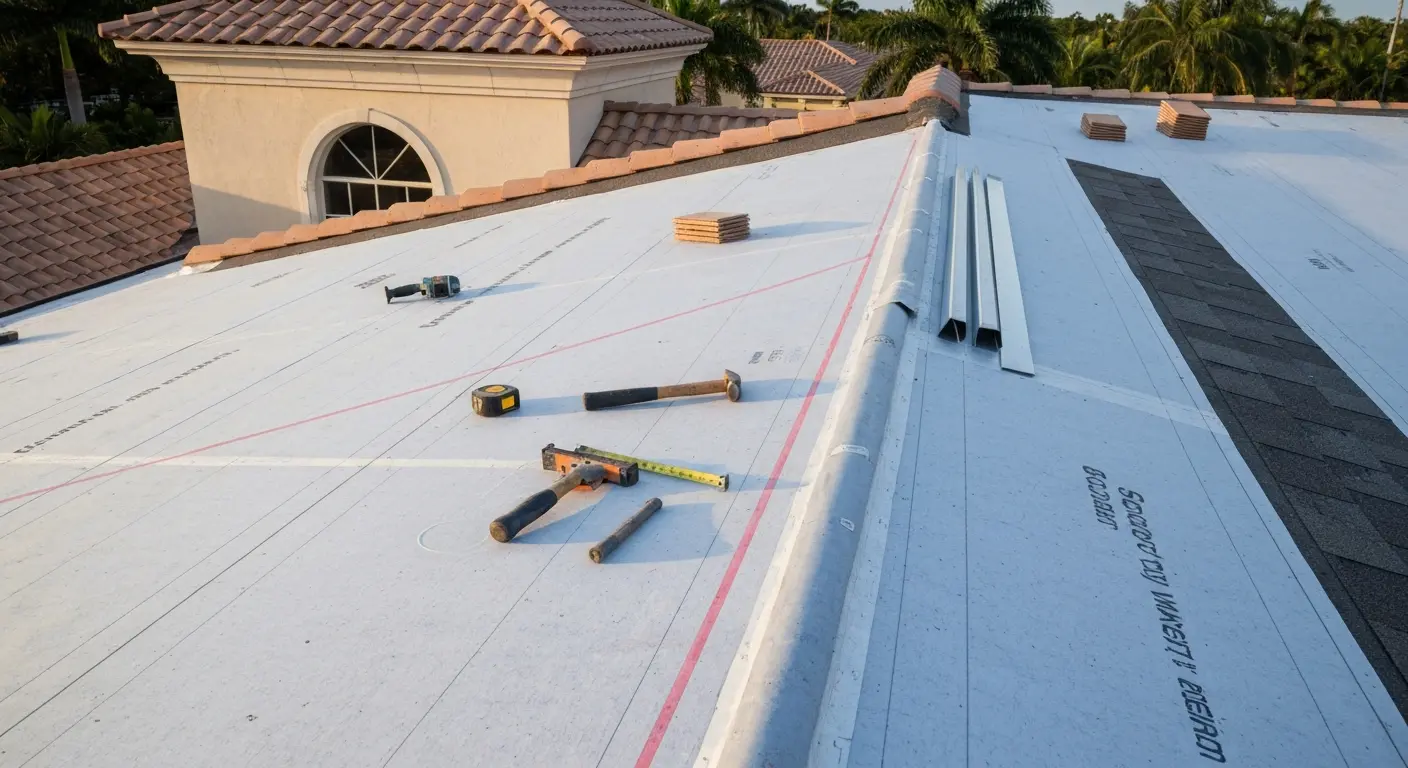
Full roof replacement showing secondary water barrier installation in Coral Gables
Water Damage Restoration
Roof leaks create secondary water damage inside walls, attics, and crawl spaces. We extract standing water, dry structural material, remove compromised drywall and insulation, and prevent mold growth. Tropical humidity in North Miami Beach and Pinecrest means moisture removal must happen within 24–48 hours of discovery.
- Water extraction and dehumidification
- Mold inspection and remediation
- Drywall and material replacement
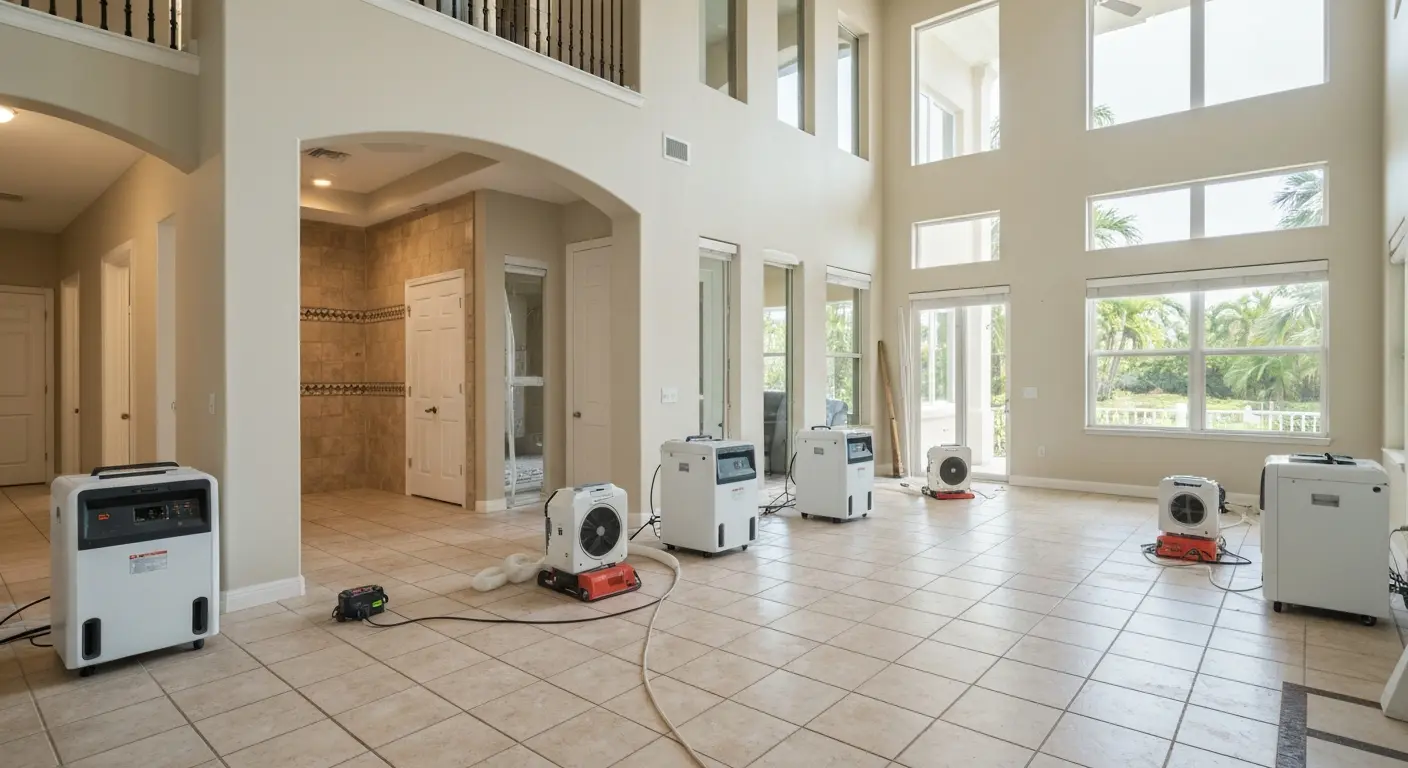
Dehumidifiers and moisture barriers in place during water restoration in North Miami Beach
Emergency Roof Repair & Tarping
Storm season from June through November brings hail, high winds, and sudden leaks. We provide 24/7 emergency response to board up openings, tarp exposed areas, and make temporary repairs. Tarping stabilizes a damaged roof until permanent work is scheduled, protecting insulation and interior finishes.
- Same-day emergency dispatch
- Temporary tarping and bracing
- Insurance claim documentation
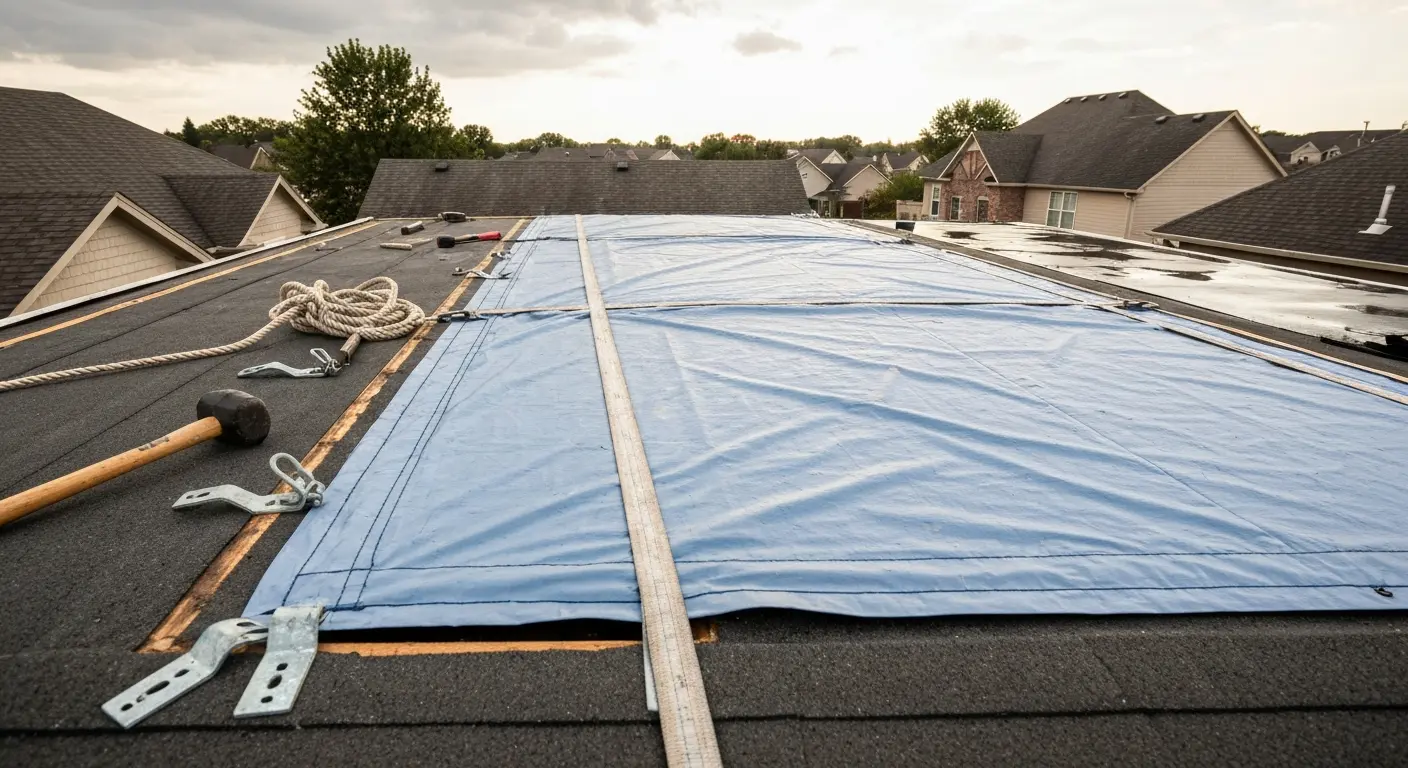
Emergency tarping after storm damage, stabilizing the structure until permanent repair
Why Local Expertise Matters
Miami-Dade County has the strictest roofing codes in the United States
Notice of Acceptance (NOA) Requirements
All roofing materials used in Miami-Dade must pass rigorous wind-resistance and impact-resistance tests specific to the High Velocity Hurricane Zone (HVHZ). Products without NOA approval fail permit review and delay projects. We source only pre-approved materials and help navigate county permit systems.
Permits and secondary water barriers are mandatory on all roof work. Miami-Dade enforces roof-to-wall connections and underlayment standards that many other states skip. Skipping these means failed inspections and denied insurance claims.
Wind Uplift Resistance & Material Selection
Roofs in HVHZ zones must resist winds up to 180 mph. Metal roofing, concrete tile, and impact-resistant shingles all meet the standard if installed correctly. Clay tile in Coral Gables and Doral requires extra attachment clips and basesheet underlayment—this detail matters.
Tropical Humidity & Mold Prevention
South Florida's 75–90% relative humidity accelerates mold growth in wet spaces. Active dehumidification, quick drying, and complete removal of compromised materials are non-negotiable after water damage. Waiting even a week invites black mold, which costs $5,000–$15,000+ to remediate and triggers health concerns.
Coverage & Availability
We serve all neighborhoods and commercial areas across Miami-Dade County, including Coral Gables, Kendall, Wynwood, Little Havana, North Miami Beach, Homestead, Pinecrest, Doral, and Aventura. Whether your building is single-family, townhouse, condo, or commercial, we handle permits, inspections, and code compliance for your specific structure type.
Getting Here & Service Dispatch
Based in Miami-Dade County, we respond to emergency calls 24/7 during storm season (June–November) and regular hours year-round. For non-emergencies, call during business hours to schedule a free inspection. For immediate leaks or storm damage, call our emergency line for same-day assessment and temporary protection.
All work is performed by trained, licensed crews familiar with Miami-Dade permits, inspections, and high-wind installation protocols. Insurance documentation and claim support are included in every project.
Why Homeowners & Businesses Choose Us
500+ Completed Projects
Twenty years of roofing and water damage work across Miami-Dade neighborhoods builds trust and local knowledge that keeps roofs safe.
Permit & Inspection Experts
We handle all Miami-Dade County Building Department coordination, NOA material sourcing, and final walk-throughs so you don't worry about code details.
24/7 Emergency Response
Storm damage doesn't wait for business hours. We dispatch crews immediately for tarping, water extraction, and temporary protection during tropical season.
Your roof is your home's first and best defense against Miami weather. When leaks or storm damage strike, fast professional action prevents water from reaching insulation, framing, and electrical systems—saving thousands in secondary damage costs and keeping your family safe.
Frequently Asked Questions
Do I need a permit for roof repair in Miami-Dade County?
Yes. Any repair or replacement work requires a Miami-Dade building permit, regardless of project size. Permits trigger inspections to verify code compliance, NOA material use, and proper fastening. We handle all permit paperwork and coordinate with the building department.
What is a Notice of Acceptance (NOA) and why does it matter?
An NOA certifies that roofing materials have passed Miami-Dade wind and impact resistance tests required for the High Velocity Hurricane Zone. Only NOA-approved products can be used in Miami-Dade. No NOA = failed permit inspection and no insurance coverage if a claim arises.
How quickly does mold grow after a roof leak in Miami?
Mold spores germinate within 24–48 hours in 75–90% humidity. Once active, mold spreads through insulation and drywall, becoming costly to remove. Water damage restoration must happen immediately to prevent health hazards and structural damage.
Can I file an insurance claim for roof damage before repair?
Yes. Document damage with photos and video before cleanup. Contact your insurer within 48–72 hours and submit your claim. Keep all receipts for temporary repairs (tarping, water extraction). A public adjuster can help maximize your claim if the insurer undervalues the damage.
What's the typical timeline for a full roof replacement in Miami-Dade?
Permit approval takes 5–10 business days. Installation typically requires 3–7 days depending on size and material. Final inspection follows once work is complete. From permit to close-out: 2–4 weeks. Emergency jobs bypass standard timelines with expedited permits.
How often should I have my roof inspected in Miami?
Inspect at least twice a year (spring before storm season, fall after season ends) and always after severe weather. Regular inspections catch loose shingles, worn seams, and gutters before small leaks become big water damage problems.
Local Roofing Contractor Expertise
From Coral Gables to Kendall and across Miami-Dade County, roofs face relentless heat, humidity, and storm exposure. A roofing contractor in Miami Dade County, FL who understands your local climate keeps water from reaching walls and foundations. We handle inspections, repairs, installations, and emergency damage control when leaks strike.
This page covers how roofing and water damage restoration work together, what to watch for, and why timing matters in South Florida's building environment.
How Roofing & Water Damage Restoration Work
Stop leaks before they cost you thousands in structural repair and mold remediation
Assess & Inspect
Walk the roof for missing shingles, tile cracks, pooling water, and worn seams. Document photos for insurance before cleanup or repair work begins.
Stop the Water
Temporary tarping or patching halts active leaks. In Miami-Dade, water can penetrate drywall and wood framing in hours, so speed prevents mold growth.
Dry & Restore
Remove wet materials, run dehumidifiers, and clean affected areas. Water damage restoration ensures no hidden pockets remain to trigger mold.
Rebuild & Code Comply
Install new roof decking, underlayment, and materials with Miami-Dade Notice of Acceptance approval. New construction triggers wind and impact tests.
You'll always know what's happening next—and when.
Our Services
Roof Repair & Patching
Leaks, missing shingles, cracked tiles, and storm damage need quick attention in neighborhoods like Wynwood, Little Havana, and residential Kendall. We patch, seal, and reinforce weak spots with NOA-approved materials that meet Miami-Dade wind uplift standards.
- Shingle & tile replacement
- Flashing and vent sealing
- Underlayment repair
Shingle repair and replacement in Wynwood and surrounding Miami-Dade neighborhoods
Roof Installation & Re-Roofing
When a roof reaches the end of life or fails inspection, full installation replaces decking, underlayment, and all fastening. Miami-Dade permits require roof-to-wall connections and secondary water barriers on all new work. Masonry block homes in Coral Gables and Homestead need especially strong attachment systems.
- Metal, tile, asphalt shingle systems
- Secondary waterproofing membranes
- Permit coordination & final inspection
Full roof replacement showing secondary water barrier installation in Coral Gables
Water Damage Restoration
Roof leaks create secondary water damage inside walls, attics, and crawl spaces. We extract standing water, dry structural material, remove compromised drywall and insulation, and prevent mold growth. Tropical humidity in North Miami Beach and Pinecrest means moisture removal must happen within 24–48 hours of discovery.
- Water extraction and dehumidification
- Mold inspection and remediation
- Drywall and material replacement
Dehumidifiers and moisture barriers in place during water restoration in North Miami Beach
Emergency Roof Repair & Tarping
Storm season from June through November brings hail, high winds, and sudden leaks. We provide 24/7 emergency response to board up openings, tarp exposed areas, and make temporary repairs. Tarping stabilizes a damaged roof until permanent work is scheduled, protecting insulation and interior finishes.
- Same-day emergency dispatch
- Temporary tarping and bracing
- Insurance claim documentation
Emergency tarping after storm damage, stabilizing the structure until permanent repair
Why Local Expertise Matters
Miami-Dade County has the strictest roofing codes in the United States
Notice of Acceptance (NOA) Requirements
All roofing materials used in Miami-Dade must pass rigorous wind-resistance and impact-resistance tests specific to the High Velocity Hurricane Zone (HVHZ). Products without NOA approval fail permit review and delay projects. We source only pre-approved materials and help navigate county permit systems.
Permits and secondary water barriers are mandatory on all roof work. Miami-Dade enforces roof-to-wall connections and underlayment standards that many other states skip. Skipping these means failed inspections and denied insurance claims.
Wind Uplift Resistance & Material Selection
Roofs in HVHZ zones must resist winds up to 180 mph. Metal roofing, concrete tile, and impact-resistant shingles all meet the standard if installed correctly. Clay tile in Coral Gables and Doral requires extra attachment clips and basesheet underlayment—this detail matters.
Tropical Humidity & Mold Prevention
South Florida's 75–90% relative humidity accelerates mold growth in wet spaces. Active dehumidification, quick drying, and complete removal of compromised materials are non-negotiable after water damage. Waiting even a week invites black mold, which costs $5,000–$15,000+ to remediate and triggers health concerns.
Coverage & Availability
We serve all neighborhoods and commercial areas across Miami-Dade County, including Coral Gables, Kendall, Wynwood, Little Havana, North Miami Beach, Homestead, Pinecrest, Doral, and Aventura. Whether your building is single-family, townhouse, condo, or commercial, we handle permits, inspections, and code compliance for your specific structure type.
Getting Here & Service Dispatch
Based in Miami-Dade County, we respond to emergency calls 24/7 during storm season (June–November) and regular hours year-round. For non-emergencies, call during business hours to schedule a free inspection. For immediate leaks or storm damage, call our emergency line for same-day assessment and temporary protection.
All work is performed by trained, licensed crews familiar with Miami-Dade permits, inspections, and high-wind installation protocols. Insurance documentation and claim support are included in every project.
Why Homeowners & Businesses Choose Us
500+ Completed Projects
Twenty years of roofing and water damage work across Miami-Dade neighborhoods builds trust and local knowledge that keeps roofs safe.
Permit & Inspection Experts
We handle all Miami-Dade County Building Department coordination, NOA material sourcing, and final walk-throughs so you don't worry about code details.
24/7 Emergency Response
Storm damage doesn't wait for business hours. We dispatch crews immediately for tarping, water extraction, and temporary protection during tropical season.
Your roof is your home's first and best defense against Miami weather. When leaks or storm damage strike, fast professional action prevents water from reaching insulation, framing, and electrical systems—saving thousands in secondary damage costs and keeping your family safe.
Frequently Asked Questions
Do I need a permit for roof repair in Miami-Dade County?
Yes. Any repair or replacement work requires a Miami-Dade building permit, regardless of project size. Permits trigger inspections to verify code compliance, NOA material use, and proper fastening. We handle all permit paperwork and coordinate with the building department.
What is a Notice of Acceptance (NOA) and why does it matter?
An NOA certifies that roofing materials have passed Miami-Dade wind and impact resistance tests required for the High Velocity Hurricane Zone. Only NOA-approved products can be used in Miami-Dade. No NOA = failed permit inspection and no insurance coverage if a claim arises.
How quickly does mold grow after a roof leak in Miami?
Mold spores germinate within 24–48 hours in 75–90% humidity. Once active, mold spreads through insulation and drywall, becoming costly to remove. Water damage restoration must happen immediately to prevent health hazards and structural damage.
Can I file an insurance claim for roof damage before repair?
Yes. Document damage with photos and video before cleanup. Contact your insurer within 48–72 hours and submit your claim. Keep all receipts for temporary repairs (tarping, water extraction). A public adjuster can help maximize your claim if the insurer undervalues the damage.
What's the typical timeline for a full roof replacement in Miami-Dade?
Permit approval takes 5–10 business days. Installation typically requires 3–7 days depending on size and material. Final inspection follows once work is complete. From permit to close-out: 2–4 weeks. Emergency jobs bypass standard timelines with expedited permits.
How often should I have my roof inspected in Miami?
Inspect at least twice a year (spring before storm season, fall after season ends) and always after severe weather. Regular inspections catch loose shingles, worn seams, and gutters before small leaks become big water damage problems.
DISCOVER WHAT OUR CUSTOMERS HAVE TO SAY ABOUT US
REVIEWS
proudly serving these areas
Broward County, FL
Cape Coral, FL
Deerfield Beach, FL
Fort Lauderdale, FL
Fort Lauderdale Beach, FL
Hallandale Beach, FL
Hollywood, FL
Lauderdale-by-the-Sea, FL
READY TO take the next step?
get a free quote TODAY!
QUICK LINKS
our services
service areas
operating HOURS
Mon: 8:00 am - 6:00 pm
Tue: 8:00 am - 6:00 pm
Wed: 8:00 am - 6:00 pm
Thu: 8:00 am - 6:00 pm
Fri: 8:00 am - 6:00 pm
Sat: 8:00 am - 6:00 pm
Sun: 8:00 am - 6:00 pm